
In today’s digital world, screens are everywhere. From tablets and smartphones to computers and televisions, managing a child’s screen access can feel like a constant challenge. As parents and guardians, we want to make informed choices that support healthy development without completely shutting out the digital world. These recommendations, based on global child health guidelines and current research, are not rigid rules but starting points to help you guide your family toward a healthy relationship with technology.
Under 2: The Age of Real-World Interaction
For the youngest minds, real-world interaction is paramount. A baby’s developing brain depends on movement, eye contact, and engaging with the world through all their senses.
Recommendation: Avoid screens other than video calls with family. Live video chats allow for a degree of real-time interaction that pre-recorded content cannot replicate. For all other times, prioritize face-to-face interaction, floor time, and sensory exploration.
Ages 2-5: High-Quality, Guided Content
As toddlers and preschoolers grow, they can begin to engage with digital content in a more meaningful way, but guidance is key.
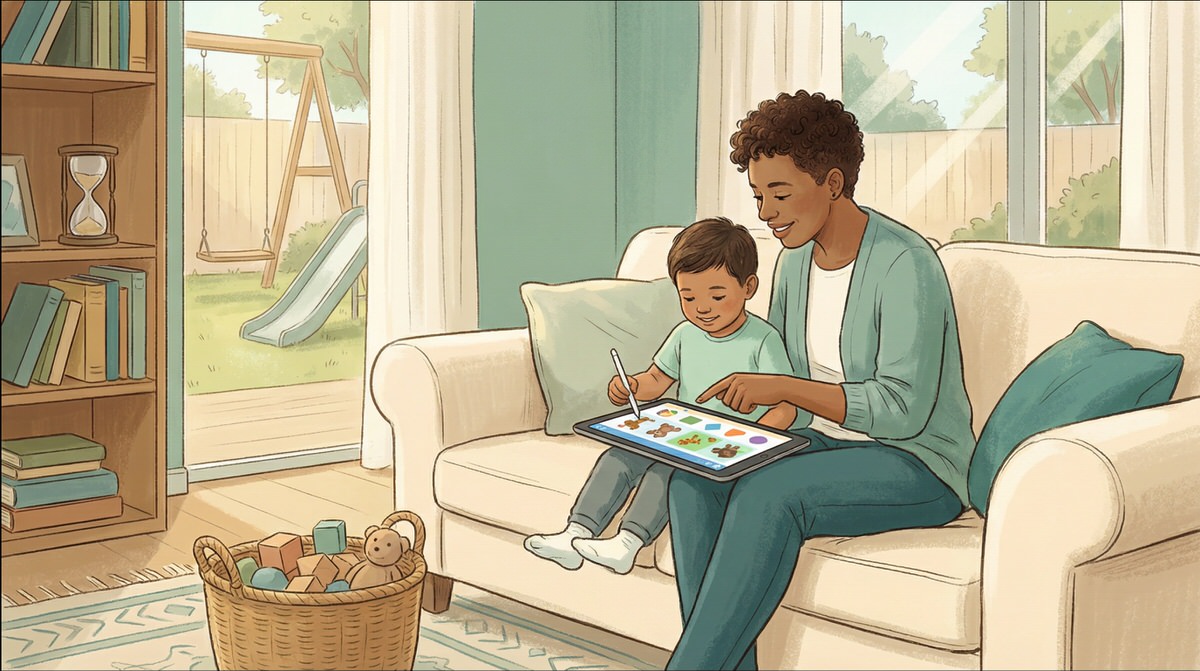
Recommendation: Aim for around one hour per day of high-quality, adult-guided content. This means choosing educational programs, playing learning games together, and talking about what you are seeing. Break screen time into shorter periods rather than long, passive sessions to help maintain their engagement and prevent overstimulation.
Ages 5-11: Finding a Balanced Use
During the elementary school years, the goal is to strike a healthy balance between screen time and other essential activities.
Recommendation: Aim for around 1-2 hours of daily recreational screen time. It is crucial to prioritize sleep, physical activity, social interaction with friends and family, and outdoor play before screens. Encourage activities that get their bodies and minds moving, and make screen time a deliberate choice rather than a default activity.
Ages 11-14: Focusing on Routines and Boundaries
For middle schoolers, the focus shifts from counting minutes to establishing healthy routines and boundaries. As they gain more independence, teaching them how to manage their time becomes more important than strict enforcement.
Recommendation: Protect sleep by avoiding screens at least one hour before bedtime. The blue light from screens can interfere with melatonin production and disrupt sleep cycles. Encourage tech-free mealtimes and create shared family spaces where screens are not allowed, fostering more opportunities for connection and conversation.
Ages 14-18: Guiding Toward Self-Regulation
By the time they are in high school, the goal is to guide young people toward self-regulation. This is the time to have open conversations about the complexities of the digital world.
Recommendation: Discuss topics like dopamine loops (the “reward” feeling from likes and notifications), online safety, body image, and cyberbullying. Talk about how screen use affects their mood, sleep, and even their friendships. Maintain clear expectations around routines and establish firm night-time boundaries to ensure they are getting the rest they need for their physical and mental health.
By tailoring your approach to your child’s developmental stage, you can help them build a healthy, balanced relationship with technology that will serve them for years to come.
If you are struggling to find a healthy balance with screen time in your home, we’re here to help. Contact CARES for a consultation to discuss strategies that can work for your family.